COMMUNIQUÉ: 123RD MEETING OF THE BOARD OF DIRECTORS
DAR ES SALAAM, 13 October 2026 — The Board of Directors of the Tanzania–Zambia Railway Authority (TAZARA) convened its 123rd meeting at TAZARA Head Office in Dar es Salaam on 12 October 2026, to review progress on revitalisation, operational performance and the financing of services during the concession transition.
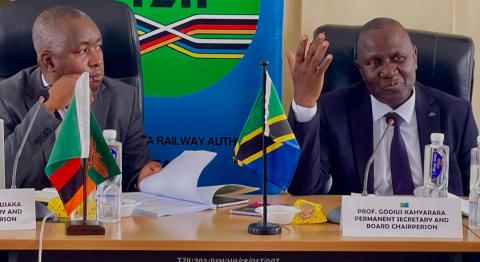
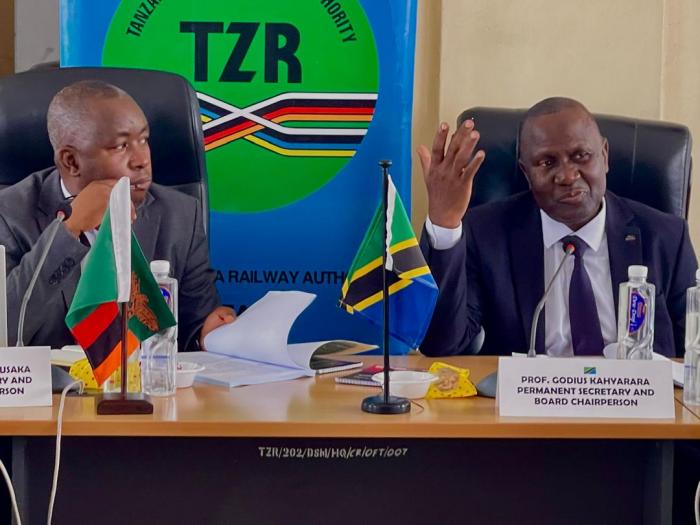
The meeting was chaired by Prof. Godius Kahyarara, Permanent Secretary in the Ministry of Transport of the United Republic of Tanzania, and co-chaired by Eng. Fredrick Mwalusaka, Permanent Secretary in the Ministry of Transport and Logistics of the Republic of Zambia. Other Directors in attendance were Mr. Peter Mayunga Noni (Tanzania) Mrs. Irene Mwamba Lumbwe (Zambia) and Mr. Lazarous Mwelwa (Zambia).
The Board considered reports and recommendations from its committees, including progress in the Revitalisation Programme, the Authority’s performance for the year ended 30 June 2026, the Five-Year Strategic Plan for 2026/2027–2030/2031 and the Corporate Budget for 2026/2027.
The principal matters considered included the following.
Revitalisation and concession oversight
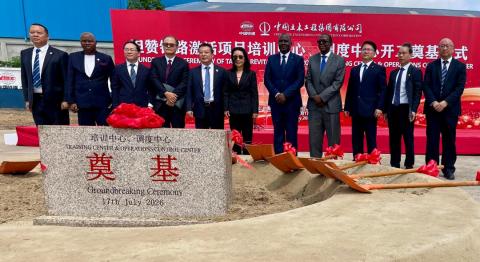
The Board reviewed implementation of TAZARA’s Concession Agreement with China Civil Engineering Construction Corporation (CCECC), which provides for US$1.4 billion in revitalisation investment. It considered the concessionaire’s progress in mobilising equipment, conducting infrastructure surveys and undertaking other preparatory activities since the Agreement was signed in September 2025.
The Board also considered outstanding requirements that must be met before the concession takes full effect, alongside arrangements to protect railway assets and maintain services during the transition.
The Board directed Management to strengthen concession oversight through a dedicated professional team, verification of railway assets, clear technical and financial reporting, and regular monitoring of the concessionaire’s investment commitments, performance, safety standards and contractual obligations. It also emphasised the need to clarify the functions that will remain with TAZARA after the concession is effected and to address employee transition, training and technology transfer.
Noting TAZARA’s declining performance over the years, the Board emphasised that revitalisation offered a critical opportunity to turn the Authority around. It called for effective implementation to meet the high expectations of the public and the business community.
Five Year Strategic Plan (2026/2027–2030/2031)
The Board approved Management’s Five-Year Strategic Plan for 2026/2027–2030/2031, which links TAZARA’s operational recovery and long-term financial sustainability to the implementation of the Concession Agreement with CCECC.
Its priorities include infrastructure rehabilitation and rolling-stock replacement, market development, digitalisation and the institutional capacity needed to manage TAZARA’s retained responsibilities after concession.
During the first three years of the Strategic Plan, TAZARA would continue operating freight services while the concessionaire implements its US$1.4 billion infrastructure and rolling-stock investment programme.
Freight volumes are projected to increase gradually from 110,000 tonnes in 2026/2027 to 160,186 tonnes in 2027/2028 and 234,103 tonnes in 2028/2029. Following the rehabilitation and the concessionaire’s takeover of freight operations, annual volumes on the railway are projected to rise to 1.2 million tonnes in 2029/2030 and 1.8 million tonnes in 2030/2031.
This transition is expected to strengthen TAZARA’s financial position through concession fees and other earnings such as passenger services and property leases.
Growth will be supported by opportunities arising from increased cargo volumes through the Port of Dar es Salaam and mineral traffic from Zambia and the Democratic Republic of Congo, with annual operating revenue for TAZARA projected to reach US$30.23 million by 2030/2031.
The Strategic Plan projects cumulative investments of US$207.57 million and a cumulative net profit of approximately US$11.71 million at the end of the Strategic Plan period. These projections incorporate US$62.04 million in Government subventions during the first three years of the plan and US$36 million in concessionaire financing during the final two years, reflecting a planned shift from Government support towards concession-related income and funding.
The Board emphasised that improved services and a sustained return to profitability were central to meeting public expectations of revitalisation.
It directed Management to align implementation, financing and performance monitoring with the concession transition, while reducing the operating deficit through stronger revenue generation, cost control and improved efficiency.
Corporate Budget for 2026/2027
The Board considered a proposed balanced Corporate Budget of US$39.92 million in total income and an equivalent amount in operating expenditure for 2026/2027. The Budget targets 110,000 tonnes of freight, 225,543 passengers and 2,256 tonnes of parcels, taking account of available rolling stock and possible service interruptions during rehabilitation.
Projected income comprises US$12.94 million from freight, passenger and parcel services, open-access operations and miscellaneous activities; US$6.53 million from non-operational sources; and US$20.45 million in Government subventions. Within the US$12.94 million, freight is expected to contribute US$8.56 million, passenger services will generate US$1.12 million, parcels approximately US$108,000, open-access operations US$2.50 million and miscellaneous activities approximately US$648,000.
Expenditure priorities include staff costs, rolling-stock repairs and maintenance, fuel and lubricants, infrastructure maintenance and administration. The Governments of Tanzania and Zambia are expected to continue supporting investments during the budget year.
The Board approved the Corporate Budget and called for continued engagement with both Governments on priority operational support, alongside stronger financial controls and measures to improve revenue generation.
Issued at Dar es Salaam